A regulation cut is not a style preference. For service members, recruits, firefighters, EMTs, and police officers around Indian Trail, grooming standards are part of the job, inspected like any other part of the uniform. The challenge is that hair keeps growing between inspections, roughly half an inch a month, and a cut that is comfortably within standard on day one can drift out of it by week three. Keeping it in regulation is mostly a calendar problem, and calendars can be planned.
Standards vary by service, department, and role, and your own unit's written standard always wins over anything in a general guide. What follows covers the common shape of those standards and how to schedule around them.
What the standards usually require
Most military and first-responder grooming rules share a structure. Hair must be neat and tapered, not touching the ears or the collar, not falling over the forehead when combed forward, and bulk limits keep the silhouette close. Sideburns are typically limited to around the middle of the ear. Fades and high-and-tight cuts are popular precisely because they sit far inside those lines, with margin to spare.
The margin is the key idea. A cut taken to the longest length the standard allows has no growing room at all. A cut taken somewhat shorter buys one to two extra weeks before the same standard is threatened. Barbers who regularly cut for service members think in terms of that margin automatically.
| Time of year / cycle | What to plan | Why it matters |
|---|---|---|
| Every 2 weeks | Standing maintenance cut: refresh the fade, taper, and neckline | Keeps most regulation styles comfortably inside standard year-round |
| Before inspections, boards, or graduations | Full cut 2 to 4 days ahead, not the morning of | Fresh edges settle, minor irritation fades, and there is time to fix anything |
| Summer months | Consider the shorter end of your allowed range | Heat, sweat, helmets, and hats punish longer regulation cuts; shorter stays neater between cuts |
| Leave and holidays | Decide in advance whether you will maintain or grow out | Two weeks of growth is recoverable in one cut; four weeks often needs a staged plan before returning to duty |
| Training blocks and deployments | Cut shorter than usual right before, and learn the basic upkeep | Access to a barber may be limited; starting short extends the compliant window |
| January / new year | Re-book the standing rhythm after holiday schedule chaos | Most drift out of standard happens when the regular interval quietly slips |
The high-and-tight and its relatives
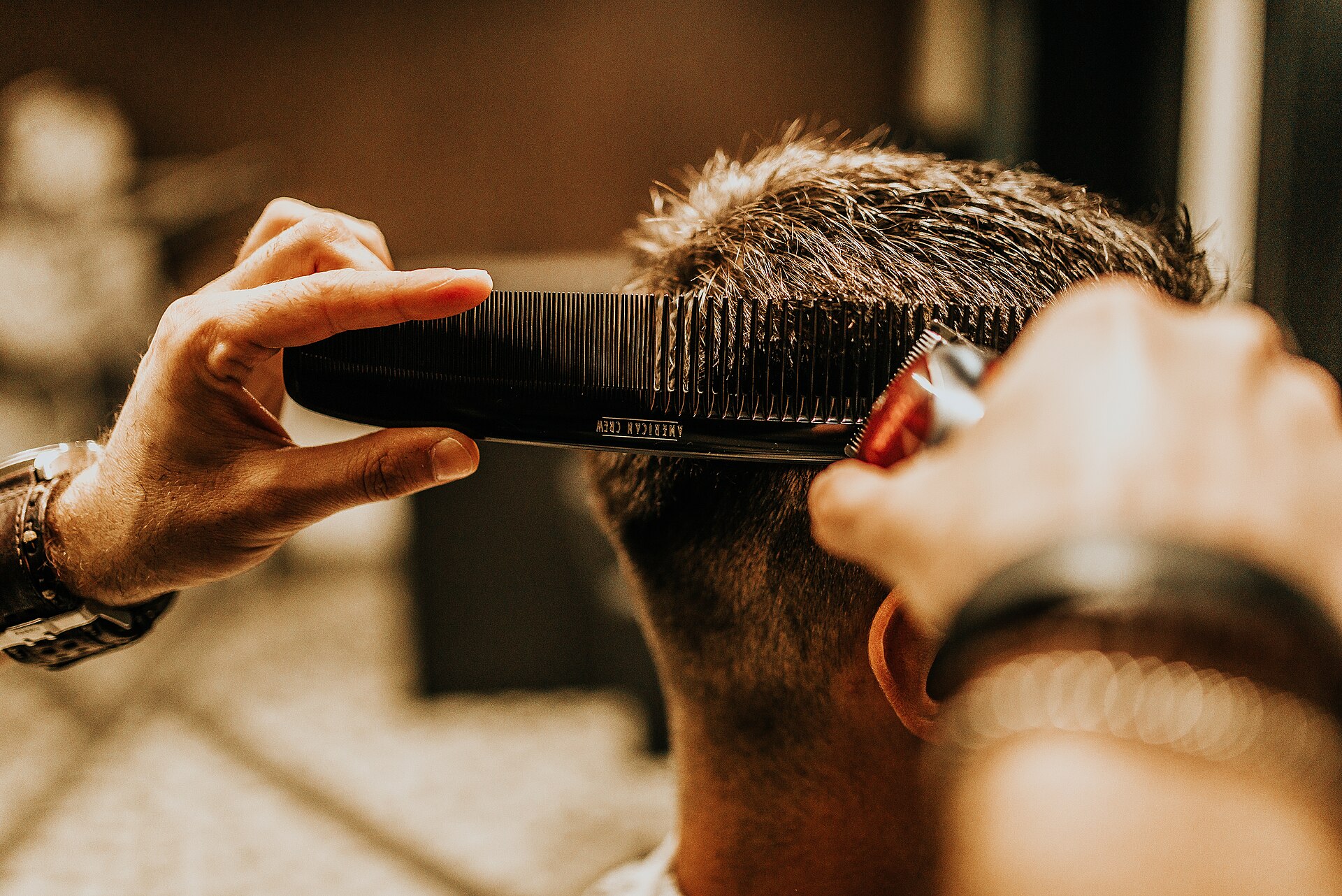
The classic high-and-tight takes the sides and back very short and high, leaving a defined patch of length on top. It is the most forgiving regulation cut to maintain because so little hair sits near the boundary lines. Skin fades with a short top, close tapers, and short crew cuts with tapered sides all serve the same purpose with slightly different looks. Men whose hair grows fast or whose standards are strict tend to live at the shorter end of this family; men in roles with looser standards can keep more length and stretch intervals a bit.
One caution: very short is not automatically compliant everywhere. Some departments set minimum expectations of professionalism that a near-shaved look meets fine, while certain ceremonial or public-facing roles have their own specifics. Know your document, and bring its actual wording to the chair if there is any doubt. At Elite Barber Shop, senior cuts and fades and tapers are everyday work, and a barber will happily cut to a written standard laid on the counter.

Between cuts: what you can maintain yourself
The neckline and around the ears are where growth announces itself first. Some men tidy the neck edge carefully at home between visits; done conservatively, it extends a cut's tidy life by about a week. The risk is creep: each home tidy moves the line a little higher, and after a few rounds the shape is distorted and the barber has to rebuild it. The safer split is to leave structure to the shop and limit home work to removing obvious stray fuzz below the natural line.
Beards and mustaches, where your standard allows them at all, follow the same logic: defined limits, kept daily with small effort, rather than rescued weekly with big effort.
Recruits and first-timers
Heading to basic training or an academy, the practical advice is simple. Arrive with hair already short and neat rather than making the first impression with a head that needs the full induction cut, and do not experiment with a new style in the final month. Once you are in a unit or department, find your barber early, explain the standard, and set the standing interval before the first time you drift out of compliance and hear about it.
Common questions
How often does a regulation cut need refreshing?
Every two weeks is the reliable rhythm for most fades and high-and-tight styles. Fast-growing hair or strict standards may need ten days; looser tapers can sometimes stretch to three weeks.
Should I get cut the day before an inspection?
Two to four days before is better. The edges still look sharp, any minor skin irritation has settled, and there is time for a fix if something is off.
Can a barber cut to my unit's written standard?
Yes. Bring the standard or a photo of a compliant cut from your own unit. A written length and taper description removes all guesswork from the appointment.
Photos in this guide are representative stock images.
← All guides from Elite Barber Shop← Back to Elite Barber Shop